

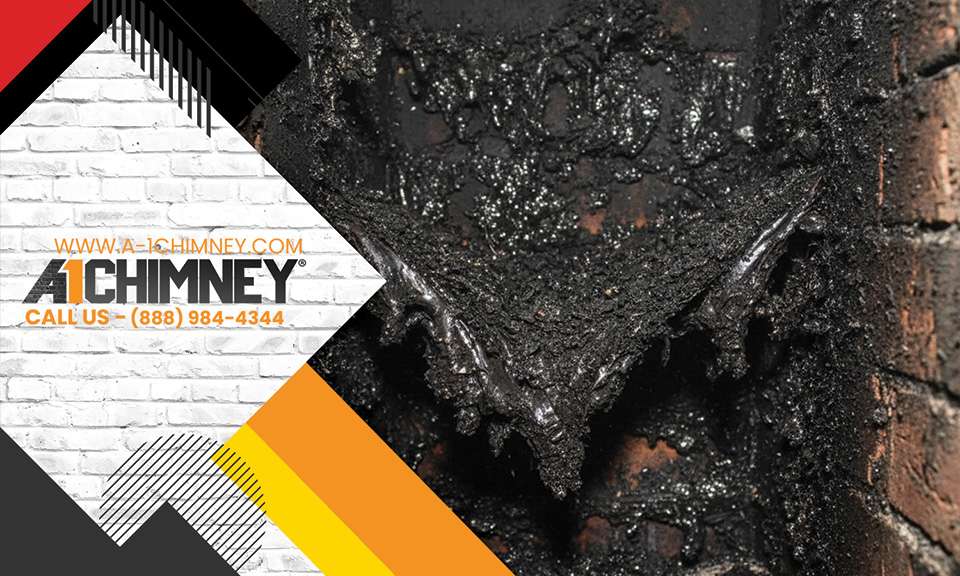
Is dangerous creosote buildup putting your home at risk of a chimney fire? Furthermore, creosote accumulation inside your flue creates a highly flammable coating that ignites at temperatures as low as 451 degrees. Moreover, recognizing creosote warning signs helps homeowners act before this tar-like substance reaches hazardous levels. Consequently, whether you need professional creosote removal or routine chimney cleaning service, addressing creosote buildup problems near you protects your family from fire and carbon monoxide exposure. In addition, understanding creosote cleaning cost helps you budget for this essential safety maintenance.
What Is Creosote and How It Forms
Specifically, creosote is a dark, tar-like byproduct that forms inside your chimney flue. Furthermore, wood smoke condenses on the cool interior walls every time you burn a fire. Moreover, as these gases cool, they deposit a sticky residue that hardens over time. Consequently, creosote buildup accumulates with every fire and gradually coats the flue walls. In addition, the type of wood you burn and the temperature of your fires influence how quickly creosote accumulation develops. Furthermore, burning unseasoned or wet wood dramatically increases the rate of buildup. Moreover, restricted airflow from a partially closed damper also accelerates the process.
Stages of Creosote Buildup
Furthermore, creosote buildup progresses through three distinct stages. Specifically, first-stage creosote appears as light, flaky soot that brushes off easily during routine chimney cleaning service. Moreover, this stage poses the least risk and costs the least to clean. Furthermore, second-stage creosote forms a shiny, tar-like coating that requires professional tools for creosote removal. Moreover, this hardened layer resists standard brushing. Consequently, third-stage creosote hardens into a thick, glazed coating that is extremely flammable. Therefore, allowing creosote to progress beyond the first stage increases both fire risk and creosote cleaning cost.
Creosote Warning Signs Every Homeowner Should Know
Moreover, recognizing creosote warning signs helps you schedule cleaning before buildup reaches dangerous levels. Specifically, a strong, acrid odor from your fireplace indicates significant creosote accumulation. Furthermore, this smell becomes stronger during warm or humid weather. Moreover, visible black or brown residue on the damper or firebox walls confirms coating inside your chimney. Additionally, reduced draft where smoke enters the room suggests creosote buildup is restricting airflow.
Similarly, other creosote warning signs include a dark coating visible with a flashlight inside the flue. Furthermore, fires that burn poorly despite using seasoned wood may indicate restricted airflow. Moreover, excessive smoke production during fires is another common indicator. Consequently, any of these signs warrant immediate professional inspection and creosote removal.
Similarly, other creosote warning signs include a thick, dark coating visible when you look up into the flue with a flashlight. Furthermore, fires that burn poorly or produce excessive smoke despite using seasoned wood may indicate restricted airflow from buildup. Consequently, any of these signs warrant immediate professional inspection and creosote removal before the accumulation becomes a fire hazard.
Why Creosote Buildup Is Dangerous
Furthermore, creosote buildup poses serious safety risks beyond simple chimney maintenance. Specifically, chimney fires from ignited creosote reach temperatures exceeding 2,000 degrees. Moreover, these fires can spread to your home’s framing within minutes. Additionally, even small chimney fires crack flue liners and damage chimney structures. Furthermore, thick creosote accumulation restricts airflow and forces toxic gases back into your living spaces. Consequently, the Chimney Safety Institute of America identifies creosote buildup as the leading cause of residential chimney fires.
Professional Creosote Removal Methods
Moreover, professional creosote removal uses techniques matched to the stage of buildup. Specifically, first-stage creosote responds well to standard chimney brushes and rotary tools. Furthermore, second-stage creosote requires chemical treatments before mechanical removal works. Moreover, third-stage glazed creosote demands specialized rotary chains and chemical solvents. Consequently, attempting removal without proper training risks damaging your flue liner.
Similarly, professional chimney cleaning service includes a thorough inspection of creosote levels and flue liner condition. Furthermore, technicians recommend a cleaning schedule based on your usage patterns. Therefore, professional creosote removal provides both immediate safety and long-term prevention.
Creosote Cleaning Cost Factors
Furthermore, understanding creosote cleaning cost helps homeowners budget for this critical service. Specifically, the stage and thickness of buildup is the biggest pricing factor. Moreover, chimney height and accessibility influence labor costs as well. Additionally, flue liner condition after cleaning affects the final estimate.
In addition, typical creosote cleaning cost ranges from $150 to $300 for first-stage cleaning. Furthermore, second-stage removal runs $250 to $500 with chemical treatment. Moreover, third-stage glazed creosote removal can cost $500 to $1,000 or more. Therefore, regular first-stage cleaning saves significant money over time.
Preventing Future Creosote Buildup
Additionally, proactive habits reduce creosote accumulation between professional cleanings. Specifically, burn only seasoned hardwood that has dried for at least six months. Furthermore, maintain hot, active fires rather than slow, smoldering burns. Moreover, higher combustion temperatures reduce unburned particles in the flue. Additionally, keep the damper fully open during fires for proper airflow.
Similarly, schedule annual chimney sweeping regardless of how often you use your fireplace. Furthermore, even moderate use produces enough creosote to create hazards over one season. Moreover, install a chimney cap to prevent rain from mixing with creosote. Consequently, these strategies reduce creosote accumulation rates and extend time between cleanings.
Final Thoughts on Creosote Buildup
In fact, creosote buildup is the most dangerous condition in any wood-burning chimney. Moreover, recognizing creosote warning signs like strong odors and visible residue helps you act early. Furthermore, professional creosote removal ensures thorough, safe cleaning that protects your home.
Consequently, don’t wait for a chimney fire to remind you that cleaning is overdue. Therefore, contact a qualified professional for creosote buildup problems near you today. In addition, understanding your creosote cleaning cost upfront helps you maintain a regular schedule that prevents dangerous accumulation.
Phone: (888) 984-4344
Email: office@a-1chimney.com
Website: https://a-1chimney.com/